
Most buildings only discover waterproofing problems when it's too late - after leaks, disruption, and costly repairs.
But it doesn't have to be that way.
You can turn Electronic Leak Detection (ELD) into a true Leak Prevention strategy - by designing a system that is measurable, verifiable, and leak-free from day one and stays that way for years.
What Is Leak Prevention with ELD?
Leak prevention isn't just about choosing the right products.
It's about designing a system that can be tested accurately and repeatably: after installation, before final handover, and throughout maintenance.
That's where the real power of Electronic Leak Detection (ELD) is.
ELD uses electrical current to locate even the smallest breach in the waterproofing layer(s), precisely and non-destructively.
But to use ELD preventively, before leaks ever appear, the system must be designed the right way.
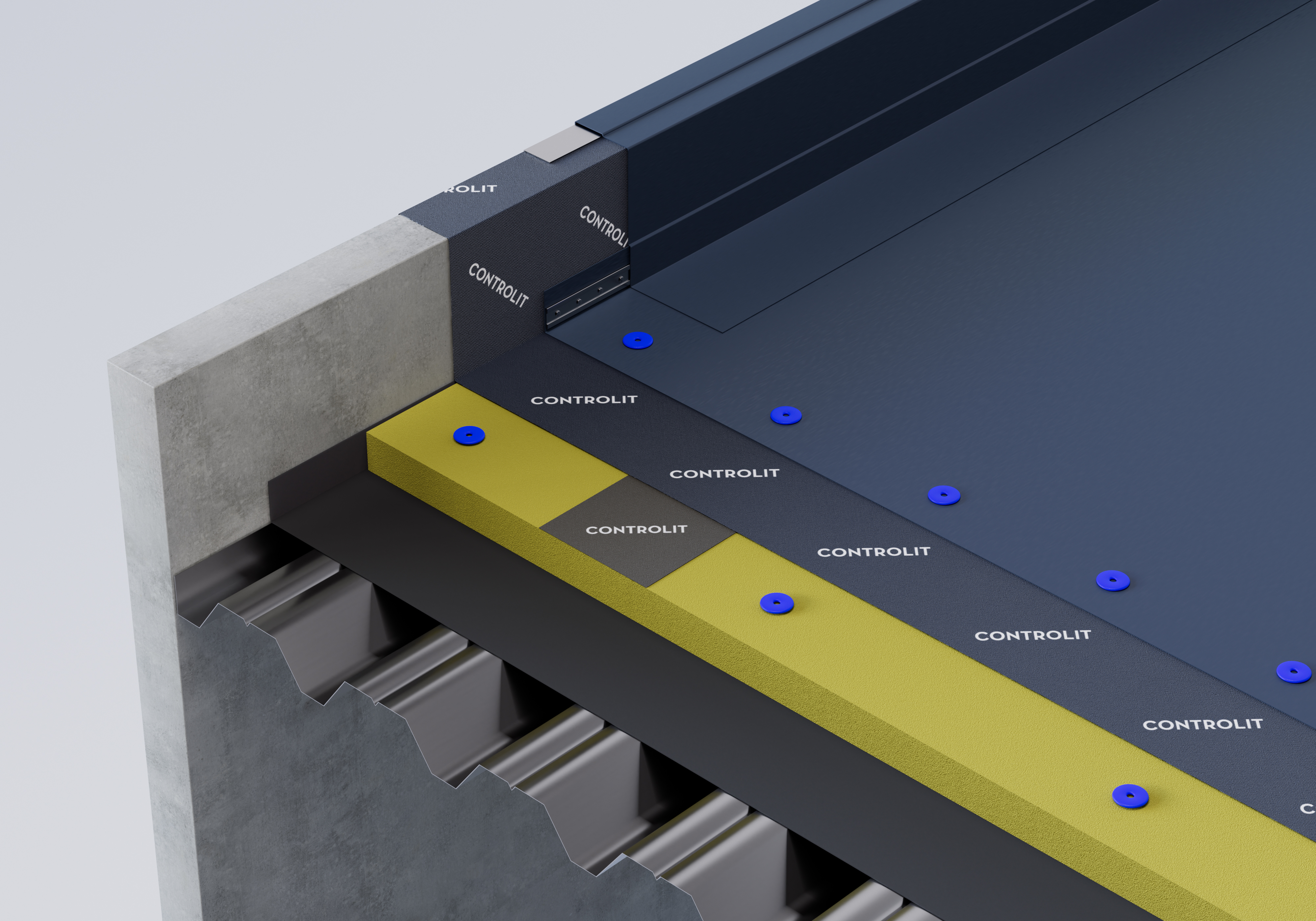
And it starts with one essential element: a conductive layer placed directly beneath the waterproofing - built specifically for long-term, accurate, and repeatable integrity testing.
The Foundation: A True Conductive Layer
To enable preventive ELD testing, the system must include a dedicated conductive layer directly under the waterproofing system.
Not mesh. Not quick fixes. Not guesswork.
It must be a material designed specifically for long-term use, and it must meet five essential criteria:
- Highly Conductive: Electrical resistance must be lower than 10,000 ohms to ensure a reliable electrical path for detection.
- Uniformity: Conductivity must be evenly distributed across the entire surface - no empty zones, no blind spots.
- Long-Lasting Conductivity: The layer must maintain its performance through installation, aging, and years of building operation.
- Non-Invasive: It must not interfere with the waterproofing, its adhesion, or system performance.
- Compatible with Both ELD Methods: It must support both High Voltage (HV) and Low Voltage (LV) testing - providing testing flexibility no matter the site conditions.
Only when all five criteria are met can you perform accurate, repeatable, and non-destructive testing, not just once, but any time it's needed throughout the building's life.
Make Integrity Testing Routine
When the system includes a proper conductive layer, ELD becomes part of your Leak Prevention Strategy, not just a last resort.
That means the waterproofing system can be tested accurately and non-destructively, as often as needed.
But ELD should always be used alongside traditional checks, including:
- Visual inspection
- Drainage checks
- Seams, flashings, and terminations - areas most prone to failure
- Detailed inspection of penetrations and transitions
The difference?
Visual checks only show what you can see. ELD finds what you can't.
That's how you catch breaches early - before they become active leaks.
And that's when Leak Prevention becomes real.
When Should You Test?
If your system is ELD-ready, testing shouldn't be a one-time event.
It should happen at key milestones throughout the project and lifecycle of the building:
- After waterproofing installation - To confirm membrane integrity before adding protection layers or continuing construction.
- Before project handover - To verify the system again after all other trades have completed their work.
- During scheduled maintenance - To detect damage caused by time, weather, or human activity and resolve it before it becomes a leak.
Each test gives you clear, verifiable data - so you're not guessing, assuming, or waiting for a failure.
The Result: Confidence You Can Back-up
With the right design, Electronic Leak Detection isn't just a test, it's a method for long-term integrity control.
You don't just build a waterproofing system, you prove it works. Again and again.
- No guessing
- No destructive testing
- No waiting for leaks
Instead, you get:
- Accurate and repeatable results over time
- Data you can act on, Traceability from start to finish
- Control over the system's integrity for years to come
Final Thought
If it can't be tested, it can't be trusted.
Design for it. Build for it. Test for it. Again and again.
That's how you build leak-free - over time.
Ready to design a leak-free system? Contact us to discuss integrating ELD into your waterproofing strategy.