Electronic Leak Detection

Find the leak.
Exactly where it is.

Electronic Leak Detection pinpoints the exact breach in your waterproofing system.
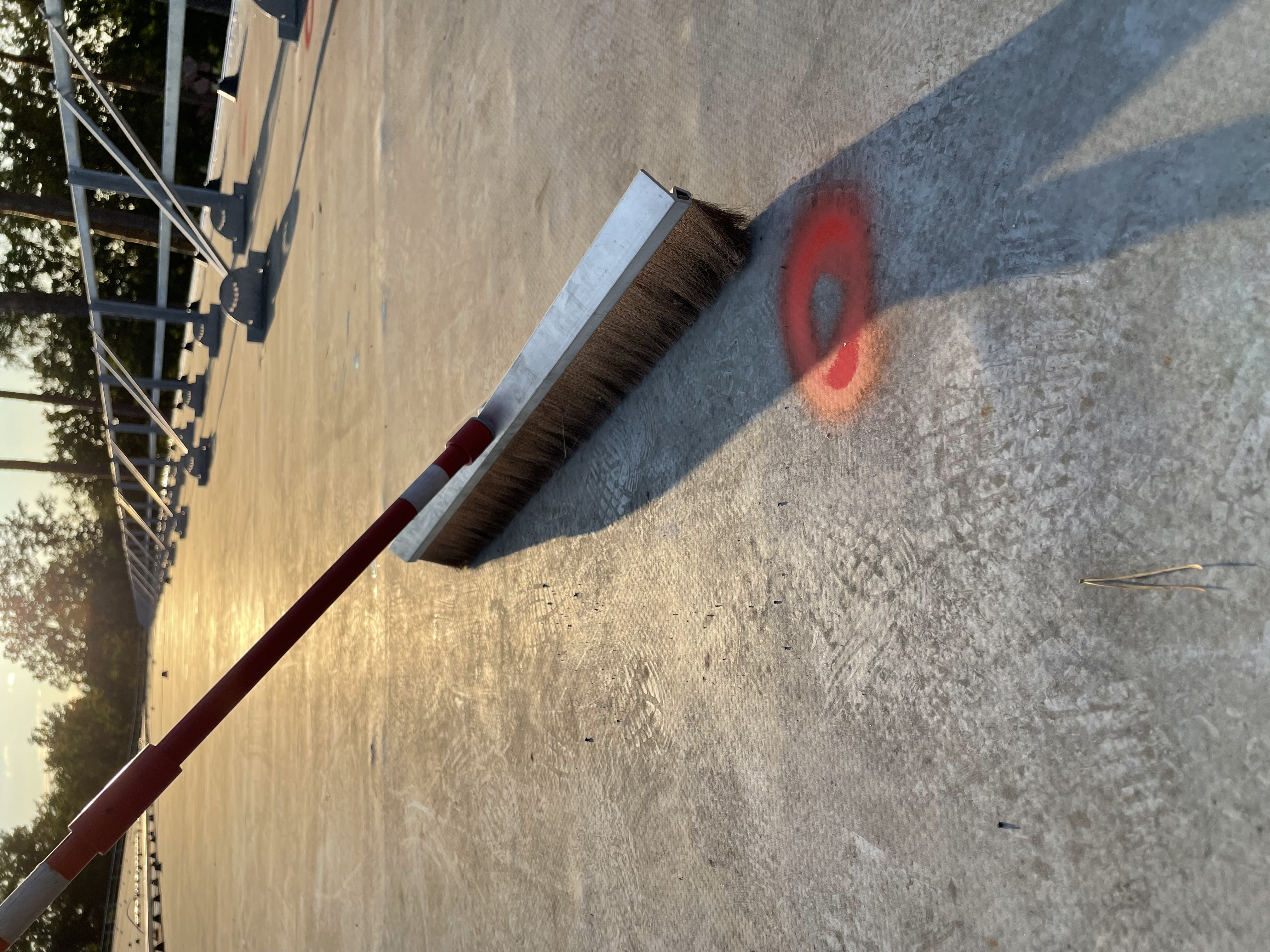
ELD inspection in progress — technician sweeping rooftop membrane
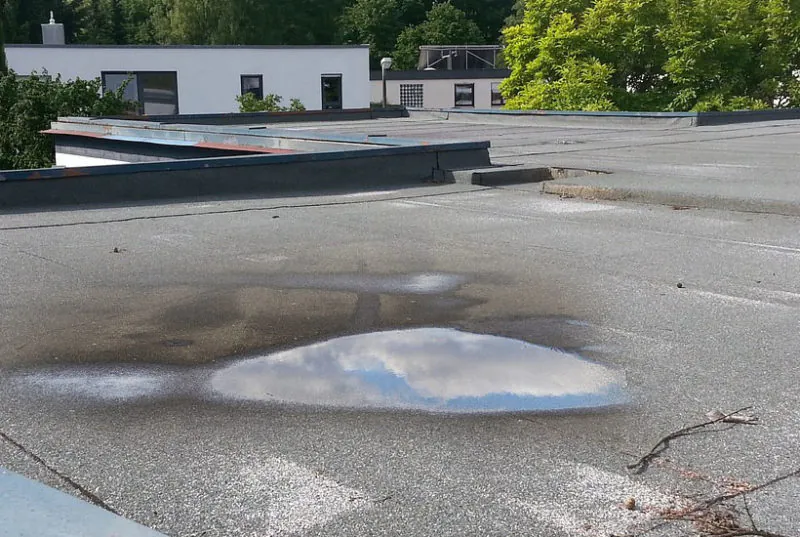
Water pooling on a flat roof membrane

Most leak investigations guess.

Water rarely appears where the defect is. It travels, spreads, and shows up far from the source.

Opening areas, testing randomly or repairing blindly, this is where time and money are lost.

A simple electrical principle.

Electronic Leak Detection uses electrical current to locate the exact point where the waterproofing layer is damaged. The result is immediate and precise.

01

Intact membrane blocks current

A continuous waterproofing acts as an insulator. No current passes through.

02

A breach creates a path

Any defect allows the current to pass through to the conductive layer below.

03

The breach is identified

The equipment detects the exact location of the defect. The operator marks it for repair.

Advanced solutions for all conditions.

Aquaguard supplies ELD equipment adapted to all site conditions: exposed membranes, covered systems, new installations, and existing buildings with active leaks. From active leak detection to full integrity verification, every solution is adapted to the project, not limited by the method.

ELD high-voltage inspection — technician sweeping
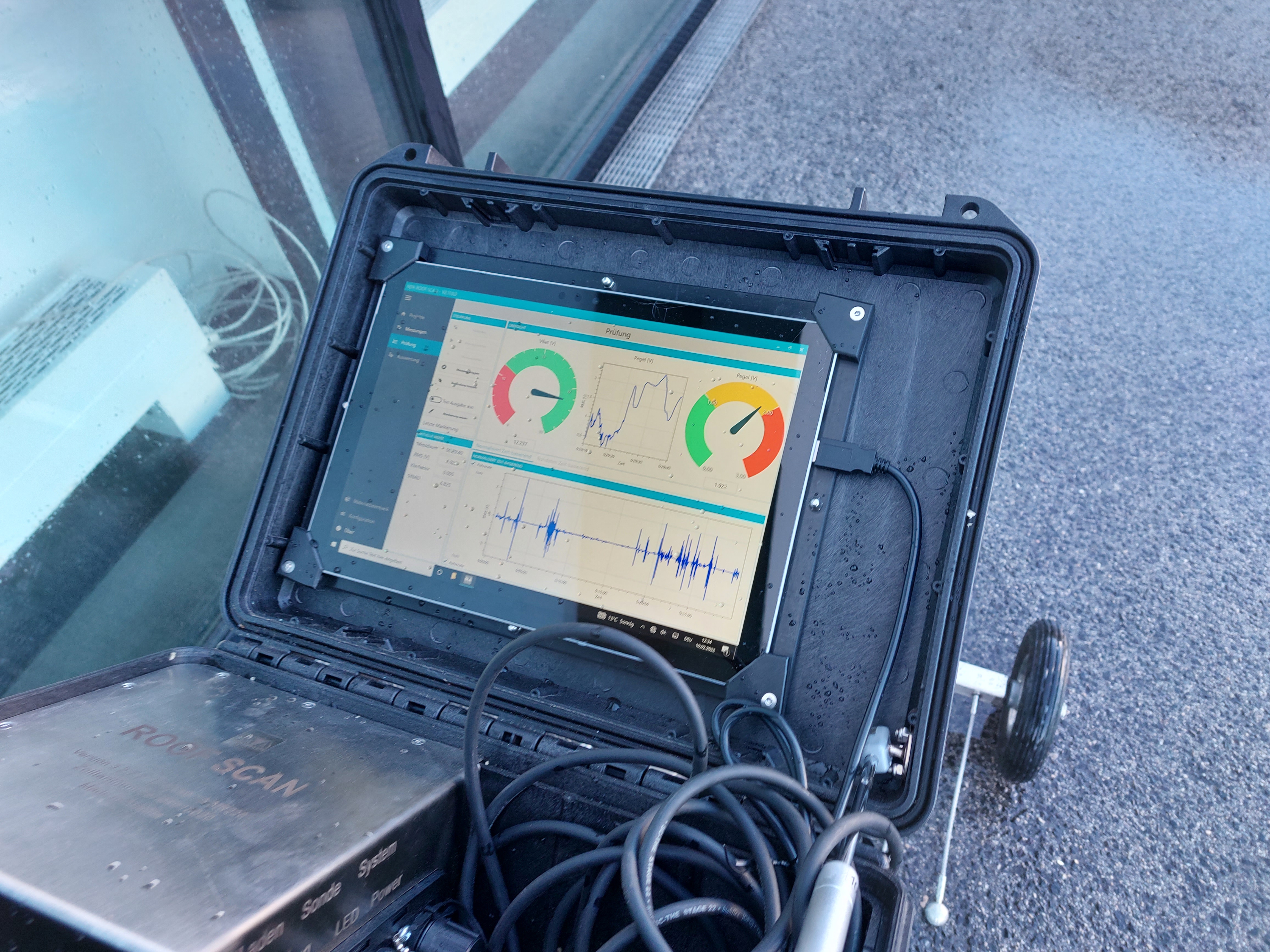
ELD equipment — MTA RoofScan leak detection displaying live leak detection data

Clarity and speed.

Exact breach location

Find the source of the leak with precision. No guesswork.

Fast diagnosis

Large areas tested in hours, not days. Immediate results.

Non-destructive

No coring, no cutting, no flooding. The assembly stays intact.

Targeted repairs only

No unnecessary demolition, no blind patching.

Inspections — Thailand

Independent ELD inspection in Thailand.

We perform Electronic Leak Detection inspections across Thailand. We locate waterproofing breaches and assess membrane condition with precise, non-destructive testing.
Independent inspections. Clear results. Documented reports.

ELD finds leaks.
Design can prevent them.

The difference is not the technology. It is the design behind it.

Today — Reactive

Leak appears. Damage is done.
ELD locates the source.

Water damage has already occurred. ELD stops the guessing and find the source for repairs.

Better — Proactive

System designed for Leak Prevention.
Verified before water ingress.

When ELD is integrated into the design, waterproofing can be tested at every stage, not just when something goes wrong.

Common questions about ELD.

What is Electronic Leak Detection (ELD)?

Electronic Leak Detection (ELD) is a non-destructive testing method used to locate breaches in waterproofing membranes. It uses electrical current to identify the exact point where the membrane is compromised, without removing or damaging the system.

What are the two main ELD methods?

There are two methods: High-Voltage (HV) and Low-Voltage (LV). HV testing is performed on dry, exposed membranes and detects breaches by creating a direct electrical path to the conductive layer below. LV testing is performed on a wetted surface and creates an electrical field to locate defects. The method used depends on site conditions.

What types of roofs can be tested with ELD?

ELD works on roofs with a conductive deck (metal or concrete) and non-conductive membrane. Most membranes are compatible, including bituminous, PVC, and TPO. Even EPDM can be tested with specific equipment and protocols. Wooden decks cannot be tested. Check your system specifications before planning.

How fast is ELD compared to flood testing?

ELD testing is completed within hours and provides immediate results on site. Flood testing requires filling, waiting, and draining, typically over 24 to 48 hours, without identifying the exact location of defects.

Can ELD damage the roof?

No. ELD is non-destructive and does not affect the waterproofing system. It does not introduce water load, pressure, or mechanical stress.

Is ELD accurate?

Yes. ELD can pinpoint even the smallest breach and its exact location.

What is the difference between leak detection and integrity testing?

Leak detection locates active leaks after water has entered the system. Integrity testing identifies breaches before water ingress occurs. ELD can be used for both, depending on when and how it is applied.

What's the difference between ELD and moisture monitoring?

ELD detects breaches and leaks in the waterproofing membrane, pinpointing the exact location. Moisture monitoring measures water content within the roof assembly. They serve different purposes: ELD detects waterproofing integrity defects; moisture monitoring tracks long-term water ingress over the building's life. Both can be part of a comprehensive roof health strategy.

How does ELD compare to flood testing?

ELD locates the exact defect, is non-destructive, fast, and repeatable. Flood testing only confirms that water enters the system, is slow, cannot be repeated easily, and does not identify the source.

Do you provide ELD services in Thailand?

Aquaguard performs ELD inspections in Thailand. For clients outside Thailand, we provide equipment sales, training, and technical support.

Stop guessing. Find the leak.

We supply ELD equipment across Southeast Asia and perform inspections in Thailand.

Contact us